


From Confusion to Clarity:
Reducing Student Errors by 18%

From Confusion to Clarity:
Reducing Student Errors by 18%

How small, intentional design changes created a measurable impact

How small, intentional design changes created a measurable impact

Kampus Merdeka is a nationwide government program connecting university students with six-month industry internships. Before joining, each student must prove eligibility through official letters—SR and SPTJM—signed by university leadership.

Kampus Merdeka is a nationwide government program connecting university students with six-month industry internships. Before joining, each student must prove eligibility through official letters—SR and SPTJM—signed by university leadership.

A month before registration, chaos hit:

A month before registration, chaos hit:

  • Up to 10% of students were disqualified due to to paperwork errors.

  • The verification team spent countless hours manually verifying documents, chasing down students and universities to fix errors, significantly straining resources.

  • Up to 10% of students were disqualified due to to paperwork errors.

  • The verification team spent countless hours manually verifying documents, chasing down students and universities to fix errors, significantly straining resources.

My Role

I led the UX redesign to reduce SR/SPTJM submission errors under tight timelines, identifying key behavior issues and designing quick, high-impact interventions with a minimal dev footprint.

My Role

I led the UX redesign to reduce SR/SPTJM submission errors under tight timelines, identifying key behavior issues and designing quick, high-impact interventions with a minimal dev footprint.

Quick Discovery: Finding the Real Cause

Quick Discovery:
Finding the Real Cause

Quick Discovery:
Finding the Real Cause

Before sketching solutions, I needed to understand why 1 in 10 students failed. Through quick interviews with the verification team and reviews of failed submissions, we identified two recurring issues.

Before sketching solutions, I needed to understand why 1 in 10 students failed. Through quick interviews with the verification team and reviews of failed submissions, we identified two recurring issues.

Misunderstanding submission rules

Students didn’t know SR/SPTJM could only be uploaded once per registration cycle. They assumed documents could be re-uploaded anytime.

Misunderstanding submission rules

Students didn’t know SR/SPTJM could only be uploaded once per registration cycle. They assumed documents could be re-uploaded anytime.

Misunderstanding submission rules

Students didn’t know SR/SPTJM could only be uploaded once per registration cycle. They assumed documents could be re-uploaded anytime.

Lack of clarity between document types

SR/SPTJM appeared as the 3rd and 4th items in a list of mixed documents, so students treated them as regular uploads with the same level of importance.

Lack of clarity between document types

SR/SPTJM appeared as the 3rd and 4th items in a list of mixed documents, so students treated them as regular uploads with the same level of importance.

Lack of clarity between document types

SR/SPTJM appeared as the 3rd and 4th items in a list of mixed documents, so students treated them as regular uploads with the same level of importance.

This discovery became the foundation:

This discovery became the foundation:

We didn’t need a new system; we needed to reshape user behavior at the most critical moments.

Design Interventions That Changed Student Behavior

With the limited time, we decided to focus on document submission flow.

With the limited time, we decided to focus on document submission flow.

The PM proposed splitting critical documents into a separate page. I turned that structural tweak into a behavioral intervention system — designing deliberate friction points to make students slow down, pay attention, and confirm their understanding.

The PM proposed splitting critical documents into a separate page. I turned that structural tweak into a behavioral intervention system — designing deliberate friction points to make students slow down, pay attention, and confirm their understanding.

01

Flow Intervention

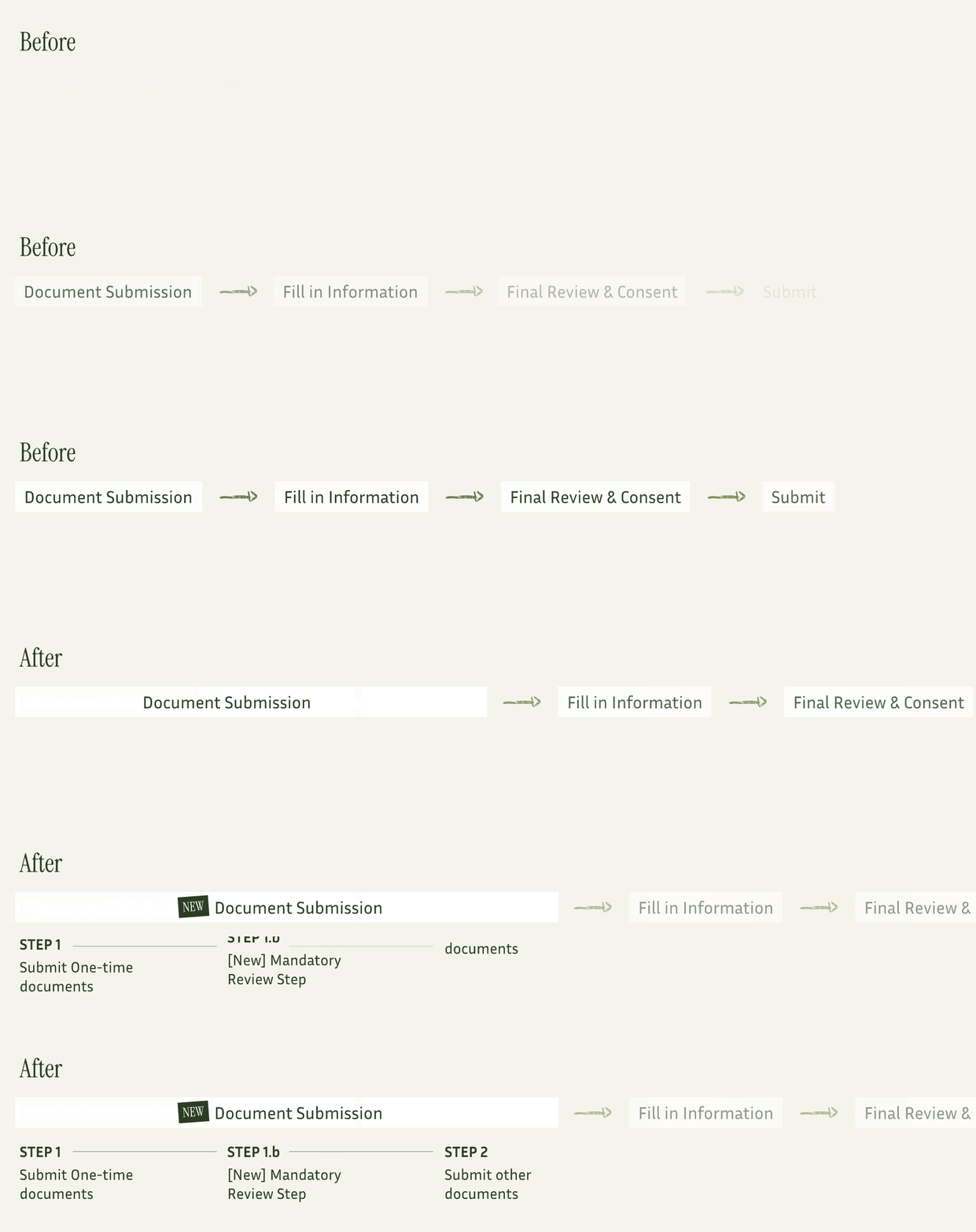
These changes focused on restructuring the flow to create clearer moments of attention — helping users recognize what matters and slow down before making irreversible actions.
02

Visual Emphasis

Visual Emphasis

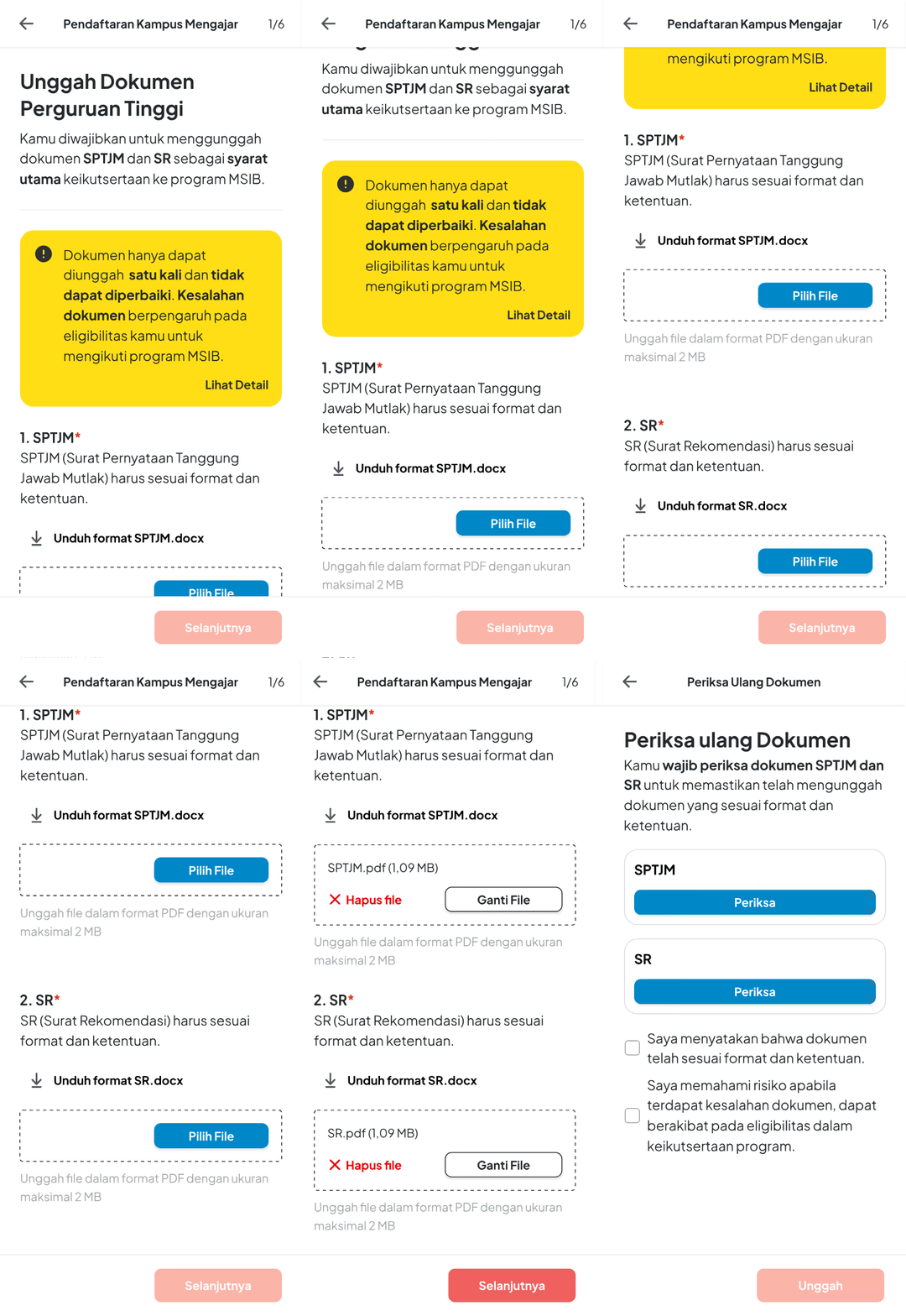
I added a prominent infobox explaining the one-time nature of SR/SPTJM and placed the consent checkbox after the review. This reinforced the importance and ensured students acknowledged it only after seeing their uploaded file.

Pendaftaran Kampus Mengajar

a/b

Unggah Dokumen Perguruan Tinggi

Kamu diwajibkan untuk menggunggah dokumen SPTJM dan SR sebagai syarat utama keikutsertaan ke program MSIB.

Dokumen hanya dapat diunggah satu kali dan tidak dapat diperbaiki. Kesalahan dokumen berpengaruh pada eligibilitas kamu untuk mengikuti program MSIB.

Lihat Detail

1. SPTJM*

SPTJM (Surat Pernyataan Tanggung Jawab Mutlak) harus sesuai format dan ketentuan.

Unduh format SPTJM.docx

Pilih File

Unggah file dalam format PDF dengan ukuran maksimal 2 MB

2. SR*

SR (Surat Rekomendasi) harus sesuai format dan ketentuan.

Unduh format SR.docx

Pilih File

Unggah file dalam format PDF dengan ukuran maksimal 2 MB

Selanjutnya

Pendaftaran Kampus Mengajar

a/b

Unggah Dokumen Perguruan Tinggi

Kamu diwajibkan untuk menggunggah dokumen SPTJM dan SR sebagai syarat utama keikutsertaan ke program MSIB. Pastikan dokumen sesuai format dan ketentuan.

Periksa ulang Dokumen

Kamu wajib periksa dokumen SPTJM dan SR untuk memastikan telah mengunggah dokumen yang sesuai format dan ketentuan.

SPTJM

Lihat

SR

Lihat

Saya menyatakan bahwa dokumen telah sesuai format dan ketentuan.

Saya memahami risiko apabila terdapat kesalahan dokumen, dapat berakibat pada eligibilitas dalam keikutsertaan program.

Unggah
The Behavioral System

This flow was designed as a simple behavioral sequence—
guiding users from awareness to engagement to commitment at the moments that matter most.

Layered together, the flow transformed rushed clicking into deliberate decision‑making.

This flow was designed as a simple behavioral sequence—
guiding users from awareness to engagement to commitment at the moments that matter most.

Layered together, the flow transformed rushed clicking into deliberate decision‑making.

Dedicated Page → Awareness

" These documents are different."

Creates a clear distinction early, helping students recognize that SR/SPTJM require extra attention.

Dedicated Page → Awareness

" These documents are different."

Creates a clear distinction early, helping students recognize that SR/SPTJM require extra attention.

The Impact

The Impact

Before diving into the specific outcomes, here’s the big picture:

Before diving into the specific outcomes, here’s the big picture:

This redesign didn’t introduce new features or a new system — it simply reshaped how students moved through the flow. And that shift in clarity, pacing, and emphasis made an outsized difference across accuracy, user confidence, and operational workload:

This redesign didn’t introduce new features or a new system — it simply reshaped how students moved through the flow. And that shift in clarity, pacing, and emphasis made an outsized difference across accuracy, user confidence, and operational workload:

Error Rate Dropped from 25% → 7%

A focused redesign turned a high-disqualification flow into a predictable, low-error process. Similar programs still had 14–15% error rates — our interventions set a new internal benchmark.

Error Rate Dropped from 25% → 7%

A focused redesign turned a high-disqualification flow into a predictable, low-error process. Similar programs still had 14–15% error rates — our interventions set a new internal benchmark.

Error Rate Dropped from 25% → 7%

A focused redesign turned a high-disqualification flow into a predictable, low-error process. Similar programs still had 14–15% error rates — our interventions set a new internal benchmark.

Reduced Verification Team’s Workload Significantly

Students submitted correct documents on the first try. Fewer mistakes meant fewer escalations and manual interventions.

Reduced Verification Team’s Workload Significantly

Students submitted correct documents on the first try. Fewer mistakes meant fewer escalations and manual interventions.

What Followed :

This became the foundation for Phase 2 — Digital SR/SPTJM, where we partnered with universities to streamline verification and cut manual work by 70%.

What Followed :

Design turns evolving policy into a system that understands people, and helps people understand policy. It’s not only about solving problems, it’s about making sense of them especially when the destination is still being defined.

What Followed :

Design turns evolving policy into a system that understands people, and helps people understand policy. It’s not only about solving problems, it’s about making sense of them especially when the destination is still being defined.

OTHER PROJECTS

FROM MANUAL BURDEN TO 70% EFFICIENCY GAIN

THE REDESIGN OF INDONESIAN LECTURER REPORTING SYSTEM

KINIX: DESIGNING FOR A CYCLING-CONTROLLED MULTIPLAYER GAME

OTHER PROJECTS

FROM MANUAL BURDEN TO 70% EFFICIENCY GAIN

THE REDESIGN OF INDONESIAN LECTURER REPORTING SYSTEM

KINIX: DESIGNING FOR A CYCLING-CONTROLLED MULTIPLAYER GAME

OTHER PROJECTS

FROM MANUAL BURDEN TO 70% EFFICIENCY GAIN

THE REDESIGN OF INDONESIAN LECTURER REPORTING SYSTEM

KINIX: DESIGNING FOR A CYCLING-CONTROLLED MULTIPLAYER GAME

elva

retta

elva

retta

Create a free website with Framer, the website builder loved by startups, designers and agencies.